

Magnesium - Forms, Uses & Resources
Jan 31, 2026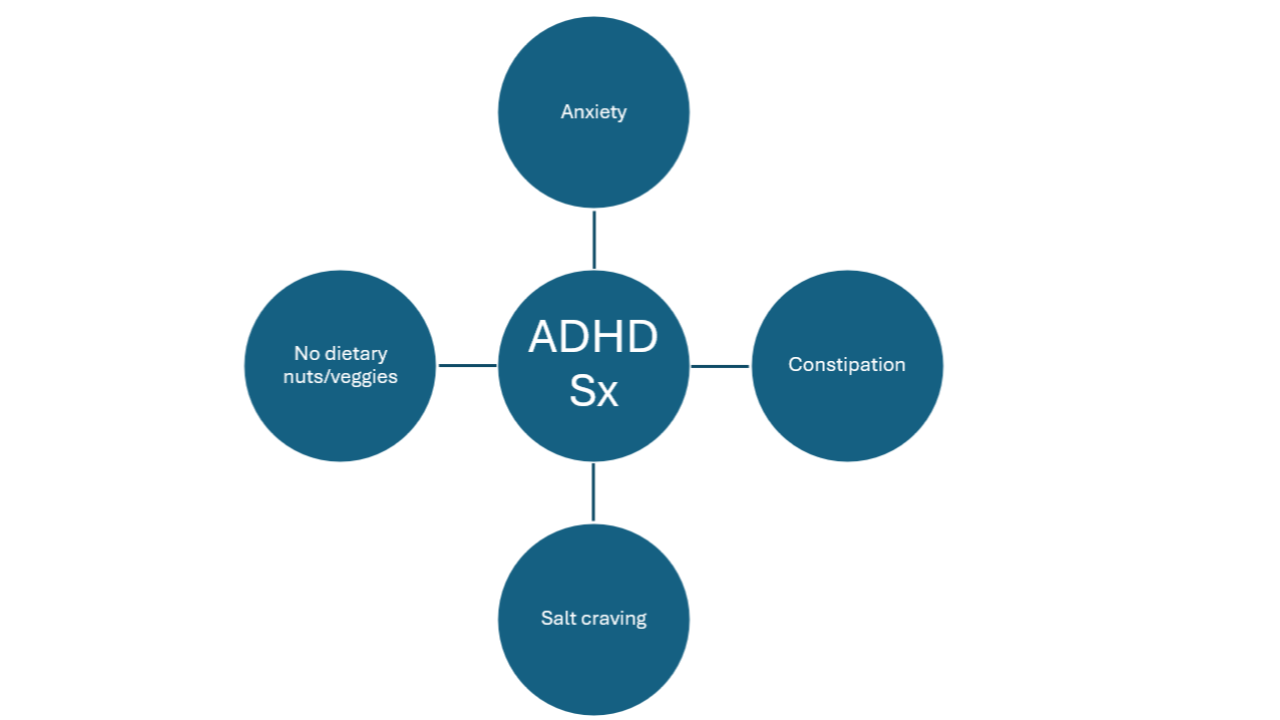
Magnesium (Mg) is a vital mineral essential for over 300 enzymatic pathways for nerve/muscle function, energy production, protein/DNA synthesis, neuropsychiatric, GI and bone health
Magnesium Facts:
- Multiple studies have shown improvement in anxiety, tics and depression with Magnesium
- Magnesium depletion is correlated with depression. A recent study reviewing data in 13, 197 participants from 2009-2018 demonstrated a statically significant association between Magnesium Depletion Scores (MDS) and development of depression.
- Magnesium deficiencies have been found in children with hyperactivity, distractibility and disruptive behavior as well as anxiety, tics and insomnia
- Constipation, sighing behaviors and salt cravings have all been associated with magnesium depletion
- Magnesium replacement can decrease hyperactivity in children with ADHD
- Refined and processed food products are drained of their magnesium content and thus many children are deficient.
- For intracellular levels, check RBC magnesium
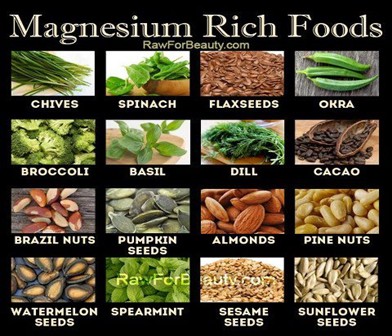
- Magnesium is found in many foods including vegetables, nuts and seeds
Forms of Magnesium Supplementation & Uses
- Magnesium citrate is a mineral compound used as a saline laxative for constipation and bowel cleansing before procedures like colonoscopies. It works by drawing water into the intestines to soften stool and promote movement and is highly absorbable. My favorite for constipation in a child who also may have anxiety or tics and very safe at increasing doses in the short term.
- Magnesium oxide is high in elemental magnesium but has a lower bioavailability (absorption rate) compared to other forms like magnesium citrate, threonate or glycinate. This low absorption rate contributes to its effectiveness as a laxative but means it may be less efficient at raising systemic magnesium levels, lowering blood pressure, preventing migraines or providing anxiety/tic/sleep support.
- As an Antacid, it works by neutralizing stomach acid to relieve heartburn, acid indigestion.
- As a Laxative, due to its osmotic effect, it draws water into the intestines, which softens the stool and stimulates bowel movements, providing short-term relief from constipation.
- Magnesium glycinate is a highly absorbable form of magnesium combined with the amino acid glycine. This form helps to promote relaxation, better sleep, and muscle health with fewer digestive issues.
- Glycine helps calm the nervous system, making it ideal for stress, anxiety, and sleep support.
- The bond with glycine makes it easily absorbed and gentle on the stomach, preventing the loose stools common with forms like magnesium citrate if a child is not constipated.
- Essential for cellular repair, DNA synthesis, muscle function, and Vitamin D activation, supporting bones and muscles.
- Magnesium threonate (Mag Threonate on OHMc) contains Magtein, which is a patented, highly bioavailable form of magnesium. It is specifically designed to effectively cross the blood-brain barrier to increase magnesium levels in the brain, supporting cognitive functions like memory, learning, focus, and brain cell communication (synapses). Magtein was developed by researchers at MIT, and found to be beneficial in improving memory, concentration, and sleep.
- Cognitive Function: Supports overall brain health, memory, and learning.
- Synaptic Health: Increases synapse density, improving connections between brain cells.
- Focus & Productivity: Helps improve concentration and focus.
- Relaxation & Sleep: Can promote relaxation and better sleep, often taken before bed.
- Magnesium salt/Magnesium Chloride/Epsom Salt Baths or Sprays - Epsom salt bath or spray (magnesium sulfate) has been shown to provide a non-oral way to absorb the magnesium and sulfate and to provide deeper relief for inflammation, pain, constipation, and even help with skin issues like psoriasis or ingrown toenails, muscle Relaxation in easing post-workout soreness, inflammatory pain and conditions like fibromyalgia.
- Stress reduction in promoting relaxation, lowering stress, and improving sleep by possibly boosting brain neurotransmitters and melatonin.
- Inflammation reduction and help with joint pain, stiffness, and swelling from arthritis, or vector-borne diseases.
- Skin exfoliation, potentially improving skin texture and helping with conditions like psoriasis or eczema, and can soothe ingrown toenails.
Increasing magnesium in the diet or adding magnesium supplementation may play a positive role in both the prevention and treatment of many disorders including depression, anxiety, tics, insomnia and constipation.
For members, mentees and patients, please find ordering information about OHMc nutraceuticals including Magnesium (Citrate) and Mag Threonate (Magtein) at oharamccabe.com
References
- Botturi A, Ciappolino V, Delvecchio G, Boscutti A, Viscardi B, Brambilla P. The Role and the Effect of Magnesium in Mental Disorders: A Systematic Review. Nutrients. 2020 Jun 3;12(6):1661. doi: 10.3390/nu12061661. PMID: 32503201
- Boyle, N, Lawton, C & Dye, L. (2017). The Effects of Magnesium Supplementation on Subjective Anxiety and Stress. A Systematic Review. Nutrients, 9(5), 429. https://doi.org/10.3390/nu9050429
- Durlach, J, Pagès, N, Bac, P, Bara, M & Guiet-Bara, A. (2004). Magnesium research: from the beginnings to today. Magnesium Research, 17(3), 163–168.
- Schwalfenberg GK, Genuis SJ. The Importance of Magnesium in Clinical Healthcare. Scientifica (Cairo). 2017;2017:4179326. doi: 10.1155/2017/4179326. Epub 2017 Sep 28. PMID: 29093983
- Xue, W., You, J., Su, Y., & Wang, Q. (2019). The Effect of Magnesium Deficiency on Neurological Disorders: A Narrative Review Article. Iranian journal of public health, 48(3), 379–387.)
- Zhang C, Hu Q, Li S, Dai F, Qian W, Hewlings S, Yan T, Wang Y. A Magtein®, Magnesium L-Threonate, -Based Formula Improves Brain Cognitive Functions in Healthy Chinese Adults. Nutrients. 2022 Dec 8;14(24):5235. doi: 10.3390/nu14245235. PMID: 36558392
- Zhao Wei, Jin Hai. Magnesium depletion score and depression: a positive correlation among US adults. Frontiers in Public Health. Volume 12. 2024. DOI: 10.3389/fpubh.2024.1486434

